Five years from retirement can feel close.
Close enough that retirement is no longer some distant idea—but far enough away that there may still be time to make thoughtful decisions before the transition actually happens.
For many people, the questions also start to change.
Instead of simply asking:
“Am I saving enough?”
You may start asking:
“What should I actually be doing now to prepare?”
That can be an important shift.
The years leading up to retirement can involve decisions about your retirement date, income, investments, Social Security, Medicare, taxes, debt, estate planning, and how much you actually want to spend.
And many of those decisions can affect one another.
Consider Your Retirement Timeline
You don’t necessarily need to know the exact day you’re going to retire.
But having a general idea of when can make it easier to begin thinking through how.
An approximate retirement date can give you something to plan around.
It can help frame questions such as:
- When might your last paycheck arrive?
- When could Social Security begin?
- Will you need health insurance before Medicare?
- When might you begin drawing from retirement accounts?
- Are there larger expenses you expect around the time you retire?
You can always adjust the date later.
But having a timeline can make some of the other decisions easier to evaluate.
Get More Specific About What Retirement Might Cost
During your working years, saving for retirement often gets most of the attention.
Put money in.
Contribute to the 401(k).
Build the investment accounts.
Retirement introduces another question:
What will it actually cost to live the life you want?
That doesn’t mean you need to predict every dollar you’ll spend for the next 30 years.
But it can be helpful to think realistically about your expected lifestyle.
Housing. Travel. Healthcare. Golf. Dining out. Helping children or grandchildren. Home projects. New cars. Hobbies. Charitable giving.
Retirement spending may also change over time.
Understanding what you expect retirement to cost can give you a better starting point for evaluating how your income and assets may support that lifestyle.
Understand Where Your Retirement Income Will Come From
For many retirees, income no longer comes from one paycheck.
It may come from several places.
Social Security.
A pension.
A 401(k).
IRAs.
Taxable investment accounts.
Cash reserves.
Possibly part-time work or other income.
The question isn’t simply how much money you have.
We believe it’s also important to understand how those resources may work together to provide retirement income—and how the timing and use of different income sources may affect the broader plan.
For example, the account you withdraw from may affect your taxable income.
Taxable income may affect Medicare premiums.
And decisions you make in one year may influence the options available to you in another.
That’s why retirement income planning can involve more than simply deciding how much to withdraw.
Think About Social Security and Pension Decisions Together With the Rest of the Plan
Social Security can feel like a standalone decision.
What age should I claim?
But the timing of Social Security can also be considered alongside other parts of your retirement plan.
You may want to look at questions such as:
- Will you still be working?
- Do you have other sources of income?
- Will one spouse have a larger benefit?
- How might your claiming decision affect a surviving spouse?
- Will you be drawing from investment accounts before Social Security begins?
If you have a pension, you may also have decisions involving payout options.
Some pensions offer a larger monthly benefit for one life.
Others may provide a smaller benefit in exchange for continuing income to a surviving spouse.
There isn’t one answer that fits every household.
We believe the more useful question is how each choice may affect the overall retirement plan—and, for couples, how it could affect both spouses.
Decide What Role Your 401(k), IRA and Cash Will Play
Retirement can change the role of accounts you’ve spent decades building.
Your 401(k) may no longer simply be a place where money goes in.
Now you may be thinking about how—and when—money comes out.
As retirement approaches, you may have choices involving employer-sponsored retirement plans and IRAs, including whether to leave assets in an existing plan, move assets to another eligible retirement account, consolidate certain accounts, or begin taking distributions.
Each option can involve different considerations, costs, services, investment choices, and tax consequences.
Cash now typically becomes part of the conversation.
Some retirees prefer having money available for near-term expenses rather than relying entirely on investment accounts for every withdrawal.
How much cash to keep can depend on your spending needs, income sources, comfort level, and broader financial plan.
Consider How Investment Risk Fits Your Retirement Plan
Retirement doesn’t automatically mean investments should become ultra-conservative.
But your relationship with investment risk may look different when you’re no longer receiving a regular paycheck.
During your working years, market declines may have felt uncomfortable.
In retirement, those same declines may feel different if you’re also withdrawing money from the portfolio.
At the same time, retirement may span many years, so growth may remain one consideration within an investment strategy.
The goal isn’t necessarily to eliminate risk.
We believe it’s to understand which risks you’re taking, why you’re taking them, and whether they still fit the retirement plan you’re building.
Put Medicare and Taxes on the Same Timeline
Healthcare can be an important part of the retirement timeline.
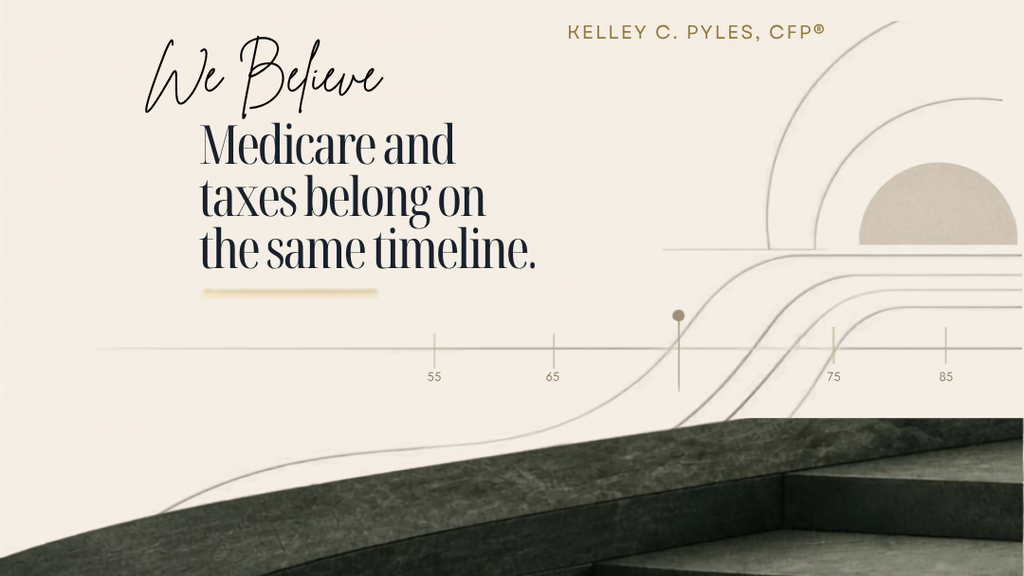
If you’re retiring before age 65, you may need to consider how you’ll handle health insurance until Medicare eligibility.
As Medicare approaches, there are also enrollment decisions to consider.
There’s another connection we feel is worth paying attention to:
Income, taxes, and Medicare.
Depending on your income, an Income-Related Monthly Adjustment Amount, commonly called IRMAA, may apply to Medicare Part B and Part D premiums.
This is also where Roth conversions may enter the conversation.
For some people, the years after retirement but before Social Security or Required Minimum Distributions begin may be a time to evaluate whether converting a portion of pre-tax retirement accounts to Roth accounts makes sense as part of the broader plan.
That doesn’t mean everyone should do a Roth conversion.
Roth conversions can have tax consequences and may also affect Medicare premiums.
We believe there can be value in looking several years ahead at your potential tax picture rather than considering each decision one year at a time.
Related: Roth Conversions: Why They Aren’t a One-Size-Fits-All Decision

Look at Debt and Large Purchases Before Retirement
Retirement can also be a natural time to take another look at debt.
Should you pay off the mortgage?
Keep it?
Pay off other debt before retiring?
There isn’t one answer that applies to everyone.
Interest rates, available assets, taxes, liquidity, monthly cash flow, and personal preferences can all be part of that decision.
We believe large purchases deserve attention too.
A new home.
A renovation.
A vehicle.
A major trip.
Helping a child purchase a home.
Those expenses may fit comfortably within the plan—but we believe it’s useful to understand what they could change before the money is spent.
Including anticipated larger expenses in retirement projections can help illustrate how they may affect the broader financial picture.
Make Sure Your Estate Plan Still Reflects Your Life
The years leading up to retirement may also be an appropriate time to consider whether beneficiary designations and estate planning documents still reflect your current circumstances.
Maybe the documents were created years ago.
Maybe you’ve moved.
Maybe your family has changed.
Maybe the people you originally named in certain roles are no longer the people you would choose today.
Questions involving wills, trusts, powers of attorney, healthcare documents, and account titling should be discussed with the appropriate legal and other professionals.
And for couples, there’s another practical question worth asking:
Does each spouse know where everything is?
You don’t both need to love finances.
But both spouses should know where the roadmap is.
That includes understanding where accounts are held, who the important professional contacts are, and where key documents can be found.
What We Consider Most Important: These Decisions Are Connected
This may be the part of retirement planning that people underestimate.
These decisions don’t always happen in isolation.
Your retirement date can affect your income needs.
Your income strategy can affect your tax picture.
A Roth conversion may affect taxable income and Medicare premiums.
Social Security decisions can influence how much income may need to come from other sources.
A major purchase may affect withdrawals—and those withdrawals may have tax consequences.
Changing one piece can sometimes affect another.
We believe that’s why it can be useful to look at the retirement picture as a whole instead of making every decision separately.
Where Should You Start?
You don’t need to solve every retirement decision five years in advance.
But beginning the planning process before retirement can provide more time to evaluate options, model different scenarios, and consider decisions as retirement gets closer.
Start with what we consider the big picture.
When might you retire?
What do you want retirement to look like?
What might it cost?
Where could your income come from?
What decisions are likely to happen between now and then?
From there, the details can begin to take shape.
Five years from retirement and starting to think more seriously about the decisions ahead?
In our office, we work with individuals and couples approaching retirement to help them better understand how retirement income, investments, tax considerations, Social Security, healthcare, and other financial decisions may fit together.
Schedule a conversation with our office.
Kelley C. Pyles, with Royal Fund Management is an Investment Adviser Representative of and investment services offered through Royal Fund Management, LLC, Royal Fund is registered with the U.S. Securities and Exchange Commission (SEC) and only transacts business in the U.S. in states where it is properly notice filed or is excluded or exempted from registration requirements. 401(k) Maneuver is another business name for Royal Fund Management, LLC. Registration as an investment advisor does not constitute an endorsement of the firm by the SEC or any other securities regulator and does not mean the advisor has attained a particular level of skill or ability. Insurance product guarantees are subject to the claims-paying ability of the issuing company. The adviser is paid commissions on the sale of insurance products only. Royal Fund Management and Kelley C. Pyles are not engaged in the practice of law or accounting and any advice provided should not be construed as legal or accounting advice. The information discussed and presented herein is intended to serve as a basis for further discussion with your financial, legal, tax and/or accounting advisors. It is not a substitute for competent advice from these advisors.